
 Sasi Nair - Shasi Nair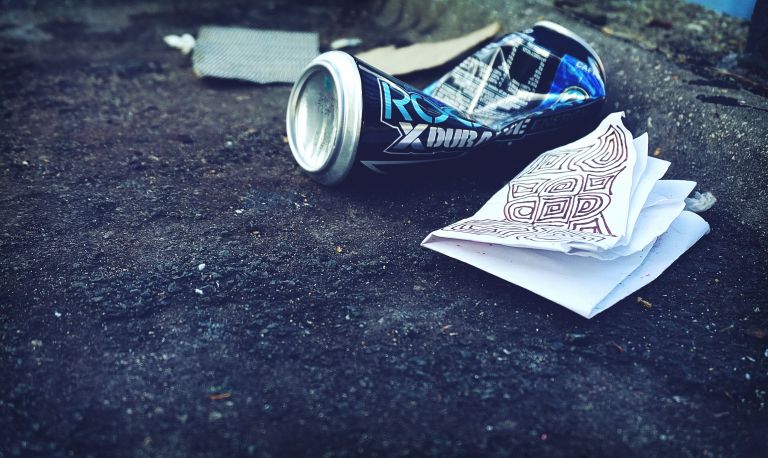
A recent video from Delhi sparked outrage on social media. It showed a family allegedly throwing food waste and disposable plates onto a public road and reacting angrily when confronted. What disturbed many people was not merely the act of littering, but the sense of entitlement that accompanied it. The road, after all, belongs to everyone. Yet somewhere along the way, many have begun treating public spaces as though they belong to no one.
Littering is one of those problems people often dismiss as insignificant. After all, what difference can a plastic bottle, a food wrapper, or a used paper plate make? But civilisations are not made dirty by mountains of garbage. They are made dirty by millions of small acts of carelessness, repeated every day.
Walk through some of India’s busiest streets after a festival, a political rally, or even an ordinary evening, and the evidence is everywhere. Plastic cups, food packets, cigarette butts, paan stains, and discarded bottles tell a story no tourist brochure can hide. Ironically, many of the same people who keep spotless homes think nothing of throwing rubbish out of car windows or leaving trash after a picnic.
Perhaps the problem lies not in the absence of cleanliness drives or sanitation workers. The problem lies in a mindset.
We often divide spaces into “ours” and “public.” Our homes are kept immaculate. Floors are swept, dustbins are emptied. Yet the moment we step outside, responsibility somehow ends. Roads, parks, railway stations, and beaches are treated as somebody else’s problem. We expect municipal workers to clean up what we ourselves have dirtied.
This attitude carries a heavy cost.
Littered roads clog drainage systems and worsen monsoon flooding. Plastic waste finds its way into lakes and rivers. Stray animals consume discarded food and plastic, often with fatal consequences. Garbage attracts pests and creates breeding grounds for diseases. Cities spend enormous sums every year cleaning up waste that should never have reached the streets in the first place.
There is another cost, one less visible but equally important.
Littering erodes civic culture.
Children learn not only from schools but also from parents. A child who watches adults throw garbage onto the road receives a silent lesson in responsibility. They learn that rules are optional and that public spaces deserve less respect than private ones. Over time, indifference becomes a habit passed down from one generation to the next.
Ironically, many Indians admire the cleanliness of countries such as Singapore, Japan, or Germany. Visitors return from foreign vacations praising spotless streets and disciplined citizens. Yet cleanliness in those countries is not sustained merely by strict laws or efficient governments. It is sustained by ordinary people who believe public spaces deserve the same respect as their homes.
Civic sense cannot be outsourced.
No number of sanitation workers can keep a city clean if citizens refuse to cooperate. Governments can install dustbins, deploy street sweepers, and launch awareness campaigns, but they cannot follow every individual with a broom. Cleanliness is ultimately a shared responsibility.
Equally worrying is the aggression that often follows when people are confronted about littering. Instead of embarrassment, many respond with anger. A simple request to use a dustbin is perceived as an insult. Ego enters the picture, and what should have been a moment of correction turns into a confrontation. This defensiveness perhaps reveals a deeper problem—the inability to accept that civic responsibility applies equally to all.
The solution, fortunately, is not complicated. Carry a small bag for waste while travelling. Wait for a dustbin. Teach children to clean up after themselves. Politely correct friends and family. Support cleanliness drives not just with words but with habits. Most importantly, remember that roads, parks, and public spaces are extensions of our collective home.
Because cleanliness is not merely about appearance.
It is about respect.
Respect for fellow citizens.
Respect for workers who clean our streets.
Respect for the environment, and ultimately, respect for ourselves.
A nation is not judged solely by its monuments or economic growth. It is judged by how its people treat the spaces they share. For a society that aspires to become a global power, perhaps one of the simplest acts of patriotism is also the most overlooked.
To carry our garbage until we find a dustbin and to leave behind memories, not litter.
More Editorials on www.mediaeyenews.com