
 Editorial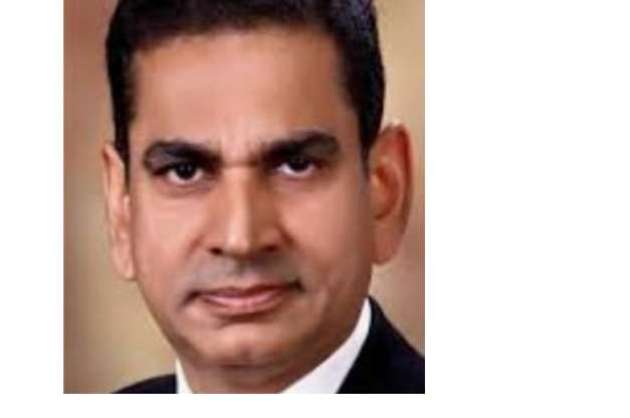
Sasi Nair K.P.
www.mediaeyenews.com
Rare is it for a municipal chief to become the toast of a country fighting a national crisis. The position ranks relatively mid-level in the National power hierarchy, and is a distant outpost of governance framework from the central authority. So much so Iqbal Singh Chahal’s success in tackling the Covid surge in Mumbai, one of the world’s most densely populated cities, offers a textbook case of leadership that must be made compulsory reading for lawmakers and people in positions of authority.
Chahal’s clear-headed leadership, quick and timely decisions, and motivating an army of dedicated workers to follow through on policies paved the way for his standout performance and helped regain finesse for the authorities. He owes his success to the free hand given to him by Maharashtra Chief Minister Uddhav Thackeray who believed in the saying, the proof of the pudding is in eating it.
Freed from having to constantly look over the shoulder at his political masters, Chahal made the best use of processes and institutions to deliver results for the community – Mumbai, home to more than 20 million people, he served. Little surprise, the Supreme Court, snowed under complaints of administrative failures at central and state levels, noted the Mumbai model should be emulated elsewhere.
The paeans of praise that poured in for Chahal underscored one truism. “Chahal has shown that given the freedom to perform, our bureaucracy is capable of rising to the occasion to overcome the worst of emergencies,” said T.K.A. Nair, former Principal Secretary and later Advisor to then Prime Minister Manmohan Singh. “The political leadership also deserves kudos to trust and empower him to organise and lead his team of Covid warriors from the front.”
When the powerful second wave of the deadly virus swept the nation in early April, policy-makers in New Delhi and elsewhere in state capitals were caught unawares. Complacency gave way to panic and chaos across much of the country as severe symptoms such as low oxygen levels brought hordes of sick to already packed hospitals. Poignant scenes of patients dying on sidewalks outside health-care centres and large numbers of burning pyres on random landscapes shocked the world.
True to the biblical saying, cometh the hour, cometh the man, Chahal, who had taken over as the Brihanmumbai Municipal Corporation (BMC) Commissioner during the pandemic in 2020, swung into action. A bureaucrat with an engineering and defence background, he chalked out three fundamental themes: Clarity in decision-making and communication, delegating power down the line, and ensuring the policies are implemented to the dot.
Chahal, whose father-in-law is former Punjab Chief Secretary Ajit Singh Chatha, used all the skills gained from working at Central and State ministries with youthful vigour. He organised war rooms in each of the 24 civic wards, all having a control centre with adequate staff to handle telephone calls. Doctors and medical support staff were on standby round the clock, ably backed by ambulances and other workers. Laboratories were mandatorily required to pass on positive test results to the BMC.
Using real-time digital technology, dashboards in each ward displayed vital information such as availability of beds and equipment. Made available in the public domain, the critical data was constantly updated by each hospital, both government and private-run, and by jumbo facilities. The decentralised approach enabled optimal use of resources, helped direct and manage beds without overwhelming headquarters with panic calls.
While many states and hospitals elsewhere struggled to cope with the rush of critical patients as well as lack of oxygen, ventilators and beds, the vibrant system put in place in Mumbai helped the city manage the crisis better. Proactive measures such as restrictions on free movement and stepped-up vaccination drives helped contain the spread.
Effective and efficient administration relies upon delegation of power by the political masters to competent authorities, and avoid interference while maintaining oversight.
“Mumbai’s fight against Covid is a saga of success for the much-maligned Indian bureaucracy,” said Nair. “A brilliant case study in governance and crisis management not only for civil servants and management gurus but our political leaders too.”
Amongst the youngest to crack the Indian Administrative Service in 1989 when he was not yet 22 years, Chahal’s next goal is to vaccinate the entire city in 60 days and ward off a dreaded third wave. The success of this plan, however, depends upon how quickly he can gain access to vaccines from the global tenders BMC has launched and local supplies.