
 Editorial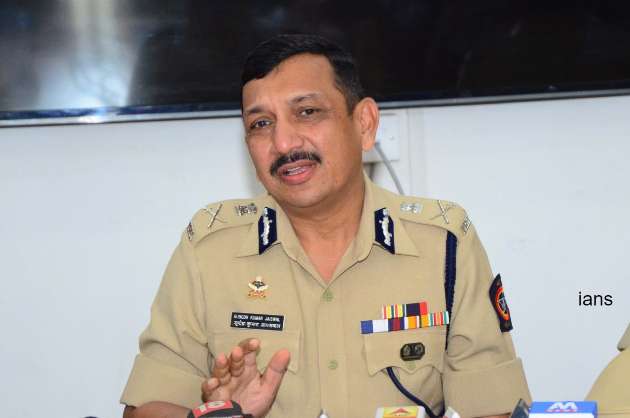
Sasi Nair K.P.
www.mediaeyenews.com
The new chief of India’s premier police agency comes with a formidable reputation for integrity, uprightness and a steeled resolve to stand by principles of justice. These are essential traits to make a success of the coveted position, and those qualities will be put to the test almost immediately.
Subodh Kumar Jaiswal, appointed last week as the 33rd head of the Central Bureau of Investigation (CBI), must expect a baptism by fire as he ascends the elite agency. The CBI is under administrative control of DOPT and is prone to act in a partisan manner at the bidding of those who wields power.
In 2013, an exasperated Supreme Court judge described the CBI as a “caged parrot” and “its master’s voice”, nomenclatures the federal authority is finding it difficult to erase. If it was the Congress party-led coalition at the receiving end of the ire then, the current Bharatiya Janata Party (BJP) dispensation in New Delhi is no different.
There have been umpteen recommendations for police reforms, but no government – both at the Centre and in the States – wants to ease the clutches of political stranglehold. Little surprise perceptions abound that the CBI is used to cover up wrongdoing by the Central government, and dig up dirt on opponents.
Jaiswal takes charge with the spotlight on the CBI’s handling of a political corruption case in West Bengal. By arresting senior leaders of the Trinamool Congress (TMC) who were allegedly seen in a sting operation accepting cash dating back to 2014, and leaving out others who had later jumped ship and joined the BJP, the CBI has opened itself to charges of playing second fiddle to New Delhi.
“It is such patently partisan acts that Jaiswal should not allow his officers to indulge in,” acclaimed former top cop Julio Ribeiro, wrote in an op-ed article in the Indian Express. “I am confident of his ability to deliver.”
The CBI badly needs to salvage its tattered reputation. Jaiswal, whose elevation owes in part to Supreme Court Chief Justice N.V. Ramana, has vast experience at the highest level to make a difference. A former Mumbai Police Commissioner who also held senior positions in Central and State agencies, the 1985 batch IPS officer has had a ringside seat to the shenanigans that control levers of power.
Backed by a two-year fixed term, during which he cannot be easily removed, Jaiswal must ward off political interferences and rely on his basic instincts for fairness. On its part, New Delhi would be better off to give him a free hand. His forthrightness, plain speaking and sage advice may not be music to power brokers, but they could save much blushes for the government.
The ruling coalition in Maharashtra would not have been in the messy predicament – where the home minister was forced to resign after accusations of corruption in police matters by a former Mumbai police commissioner – if Jaiswal’s complaints against lobbying and political patronage in police transfers were heeded when he was the Director General of Police for the state.
“Jaiswal was respected by the rank and file as an upright, honest and principled officer who dispensed justice to all according to the truth of the matter,” Ribeiro noted, referring to Jaiswal’s tenure as the top cop in Maharashtra. “That he will continue to do so in his new avatar, of that I have no doubt at all.”
Born on Sept. 22, 1962, in Dhanbad, known as India’s coal capital and infamous for the city’s legendary gang wars, Subodh Kumar Jaiswal is the third IPS officer from the Maharashtra cadre to head the CBI, after John Lobo and Mohan Katre. A daring officer, he once led many successful raids against Naxal militants in their stronghold in restive Gadchiroli district of Maharashtra.
A graduate in English from the DAV College in Chandigarh and an MBA from Panjab University, he headed the Special Investigation Team constituted by the High Court in 2003 to probe the multi-crore fake stamp paper scam by Abdul Karim Telgi. The case was later handed over to the CBI. He later worked with the Mumbai Anti-Terrorism Squad and was a member of the investigating team into the 2006 Malegaon bombings.
Known for his methodical functioning, the 36-year veteran of the police has also worked at the Research and Analysis Wing, Intelligence Bureau and the Special Protection Group that looks after the prime minister’s security.