
 Editorial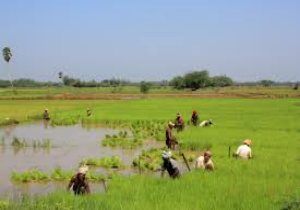
To arrest the illegal supply chain, providing seeds for cultivation to farmers on either sides of the border, India and Bangladesh need to formalize bilateral trade in rice seeds.
“At present, the cooperation between India and Bangladesh in the area of rice seed is almost negligible. Despite several instances of informal movement of high yielding variety (HYV) rice seed across the border, formal trade is conspicuous by its absence,” said the Cuts International study (CIS).
The formalization of trade can significantly improve the availability and accessibility of rice seeds.
Presently, HYV rice seeds can be imported only for test purposes and the amount of import is restricted. Lack of coordination in seeds laws, policies, regulation and standards besides the issues related to intellectual property rights are main trade barriers between the two countries.
The study stated: "The issue of timely availability and accessibility of HYV rice seeds continues. This leads to easy flow of substantial quantity of HYV seeds.” Some of the Bangladeshi varieties of rice seeds greatly popular in India are – Br-11, BRRI Dhan-28 and BRRI Dhan-29.
The Indian rice seeds varieties that have acquired the status of staple food in Bangladesh are – Swarna (including Guti and Sada), Parijat, Somsor, Swampa and Mamum among others, it said.
The certified rice seeds of Swarna and Miniket variety from India are sold to the farmers in the informal market at Bangladeshi Taka (Tk) 60 per kg, where they are being bought from India at half the amount Tk 30 per kg, it added.
The study observed that on both the countries, the public sector is dominant in supplying HYV rice seeds and due to inefficiencies prevailing in the public bodies, the supply falls short of the total demand leaving a gap to be either filled by farmers' saved seeds or informal flow within and across the border.
To improve availability and accessibility, the study suggested that there is a need to identify and test HYV rice seed available in one or both the countries that could be adaptable in the two countries. Permission to allow a particular rice seed for commercial cultivation in one or both the countries If a particular rice seed variety is found useful, is a suggestion.
India, the world's second biggest producer, is estimated to harvest 106.19 million tonnes of rice in 2013-14 crop year (July-June).